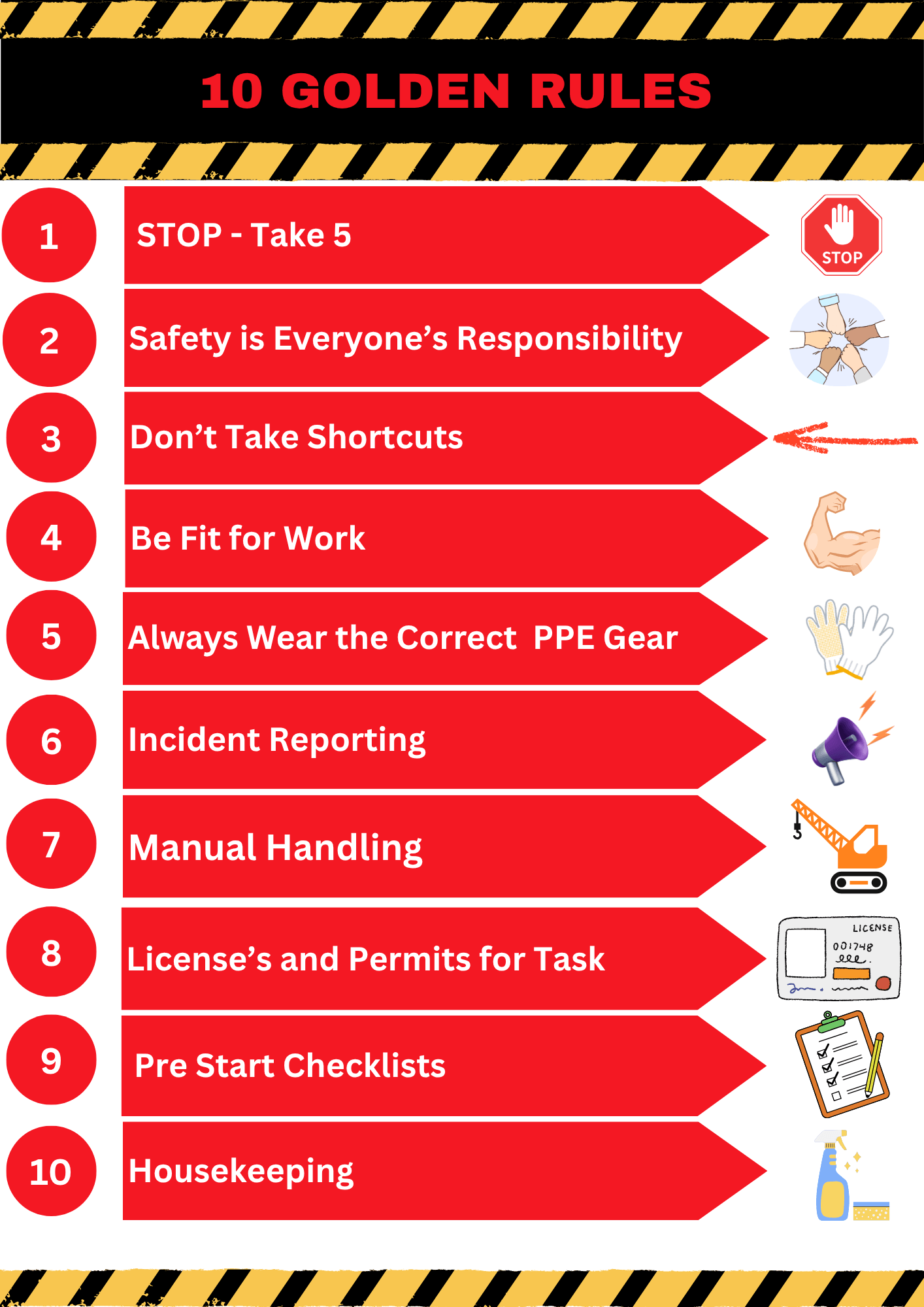
10 Golden Rules

The Golden Rules are fundamental principles that guide ethical behavior, decision-making, and best practices across the company.
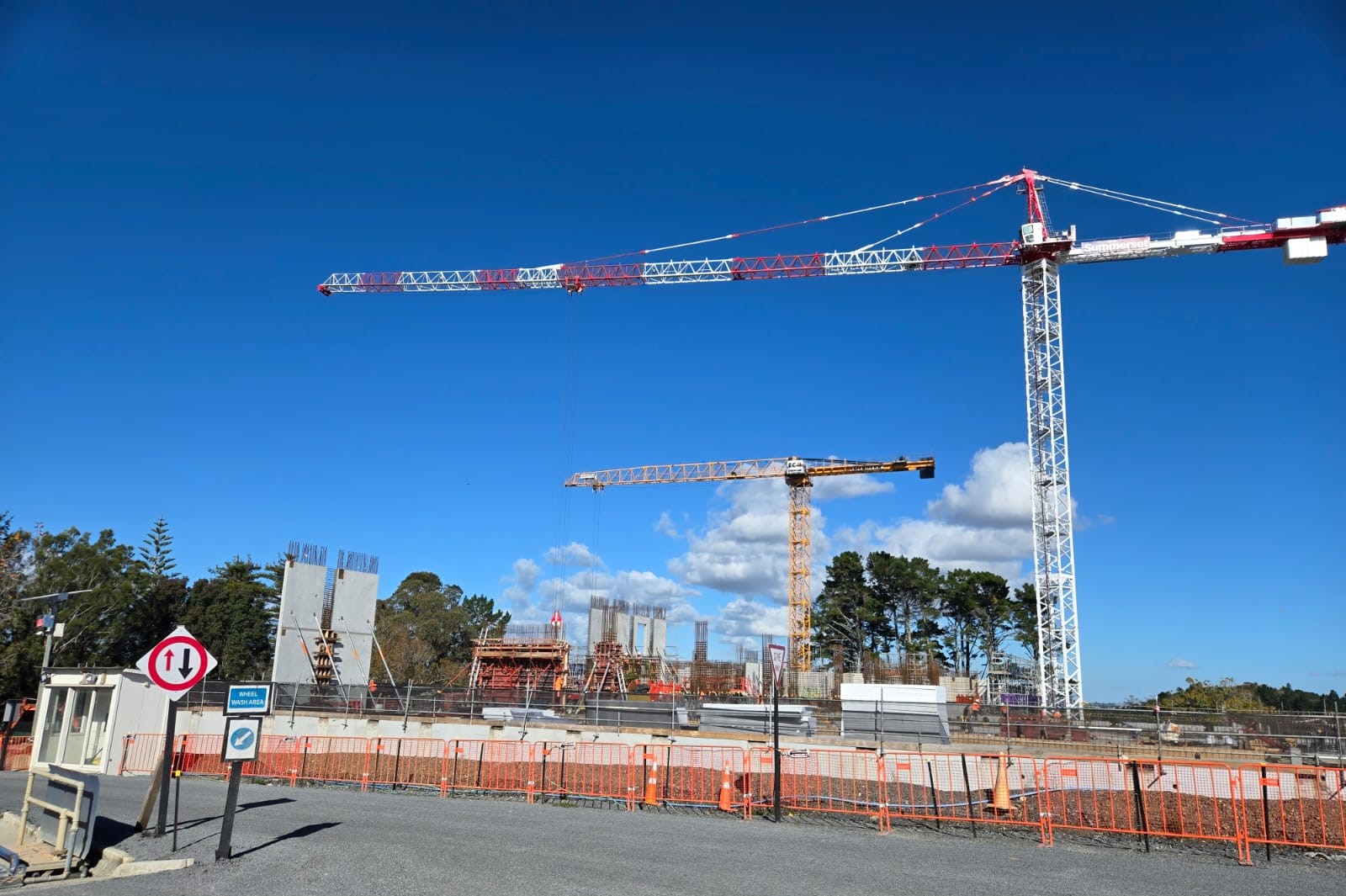
Header photo

Before starting any task remember to STOP – Take 5

  1. Stop – Observe the task, equipment and work area
  2. Check – What do I need? Have I got the right PPE Equipment 
  3. Assess – Could I or anyone else be injured? Can I reduce the risk of injury?
  4. Fix – Take the time to fix the Hazards to make it safe 
  5. Proceed – Proceed with task and follow correct procedure.

See our Stop – Take 5 Poster here

Maintaining a safe environment is not just the duty of safety professionals or management, it requires active participation from everyone.

  • Shared Accountability – Every individual, regardless of their role, should be aware of potential hazards and take steps to prevent accidents.
  • Proactive Culture – All Staff should report unsafe conditions, follow Safe Operating Procedures, and encourage others to do the same.
  • Leadership Influence – Management must set the tone by prioritizing safety, providing training, and fostering open communication.
  • Preventing Incidents – Many workplace accidents occur due to human error. When everyone takes responsibility, risks are minimized.

Legal & Ethical Duty – Companies have legal obligations to ensure safety, but employees also have an ethical duty to protect themselves and others.

Taking shortcuts often leads to unforeseen problems and a reduced quality of work or experience. 

While shortcuts might seem appealing for their speed, they frequently compromise thoroughness and can create bad habits and safety hazards. 

Following the rules ensures consistency, quality, and protection for everyone involved. Whether it’s workplace safety, ethical decision-making, or even daily routines, doing things the right way sets a strong foundation for success. Staying vigilant and holding ourselves accountable makes a big difference. Keep leading by example!

Being “Fit for Work” means ensuring that you are physically, mentally, and emotionally capable of performing your job safely and effectively. It involves several key factors:

  • Physical Readiness – Having the strength, stamina, and overall health to handle job demands.
  • Mental & Emotional Well-being – Managing stress, fatigue, and mental health to stay focused and productive.
  • Free from Impairment – Avoiding substances like drugs or alcohol that could affect performance.
  • Fatigue Management – Getting enough rest and avoiding exhaustion that could lead to mistakes or accidents.
  • Workplace Safety – Following protocols to ensure a safe environment for yourself and others.

If you need help with any of the above, or just need to talk to someone, please contact Mates In Construction.

Make sure you have all the correct PPE gear require for the Assignment, and that it is damage free.  Replace any worn or damaged PPE gear by contacting Building Recruitment Staff.  PPE includes but is not limited to:
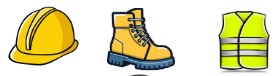
  • Hi Viz Vest 
  • Safety Boots – Laced 
  • Hard Hat (& Chin Strap)
  • Safety Gloves 
  • Safety Glasses 
  • Hearing Protection
To Order more PPE please call 0800 367 569.
safety gears1
safety gears2

Reporting unsafe acts, events, and conditions is crucial for maintaining a safe work environment. It helps prevent accidents, ensures compliance with safety regulations, and fosters a culture of accountability.

  1. Identify the Hazard – Observe and report any unsafe behavior, equipment, or environmental conditions. This can be done through the HazardCo app.
  2. Report to the Right Authority – Notify your Building Recruitment manager, site manager, safety officer, or relevant regulatory body.  This can be done through the HazardCo app.
  3. Provide Detailed Information – Include specifics like location, time, and potential risks. Taking photos also helps with investigation later on. 

Encourage a Safety Culture – Building Recruitment promotes open communication so to ensure everyone feels comfortable reporting hazards.

Manual handling in construction refers to the transporting or supporting of a load by hand or bodily force.  It’s a common source of injuries in the industry, often leading to back strain, muscle strains, and other musculoskeletal disorders, one out of 5 people call in sick every day due to back injuries. 

It’s important to remember your Safe Manual Handling training as it’s a crucial part in preventing back injuries: 

  • Manual Handling Common Causes:
    • Lifting an object that is too heavy or unstable 
    • Awkward to Reach items 
    • Repetitive motions
    • Working bent over 
    • Falling or Tripping 
    • Heavy Tool Belts 
    • Lifting before stretching 
    •  
  • Safety Awareness:
    • Avoid Lifting or Bending wherever possible 
    • If one is available, use a hand truck or pallet jack
    • Keep the object between your shoulder blades and waist 
    • If possible, push rather than pull the object 
    • If you are straining under the weight of an object, then it’s too heavy for you to lift alone, ask for help from a co worker
    • Make sure there is enough room to move when lifting
    • Make sure there are no trip hazards or slippery surfaces 
    •  
  • Prevention 
    • Follow safe work procedures 
    • Always plan your move
    • Size up the load – how can you safely reach it 
    • Test the weight of the object 
    • Get Help as needed – Team Lifts 
    •  
  • Proper Lifting Techniques 
    • Get as close to the object as possible 
    • Wide balanced stance with one foot in front of the other 
    • Bend your knees when lifting or lowering objects 
    • Use the palms of your hand not your fingertips 
    • Keep your head up while lifting 
    • Lift with a smooth steady motion 
    • Pivot to turn in the direction you want to go, NEVER twist 
    • Slowly lower the object 

Having the correct license / permit is essential for legal compliance and safety. In New Zealand, different types of licenses are required depending on the activity, such as driving, operating machinery, or running a business. 

  • Make sure you have the correct License or Certificate to operate any Machinery on site.
  • Ensure Building Recruitment has a copy of your License before you start the Job.
  • Make sure your Licenses have not expired.  If close to the expiration date, arrange a refresher course by contacting a Building Recruitment Staff member.

Licenses include but are not limited to:

  • MEWP – Mobile Elevated Working Platform License (2 Years)
  • Driver’s License Classes 1-5
  • Wheel Tracks and Rollers (WTR)
  • Forklift License 
  • Working At Heights Certificate 
  • F Endorsement 
  • Working In Confined Spaces Certificate

Prestart Checklists are essential to ensuring the machinery or equipment you are about to use are safe and ready.   A pre-start checklist is a systematic inspection conducted on equipment, vehicles, or tools before they are used, ensuring safety and preventing potential issues. It involves checking various aspects, including mechanical systems, electrical systems, fluid levels, and safety features, to identify and address any defects or hazards.

General Checks:

  • Exterior Inspection: Look for any visible damage, leaks, or unusual conditions. 
  • Fluid Levels: Check oil, coolant, brake fluid, and other fluid levels. 
  • Electrical System: Ensure lights, indicators, and other electrical components are functioning correctly. 
  • Brake System: Confirm that brakes are functioning properly and are not worn out. 
  • Tires and Wheels: Check for proper inflation, tread depth, and any damage. 
  • Controls: Verify that all controls, such as steering, throttle, and brakes, are functioning as expected. 
  • Safety Features: Inspect safety belts, emergency equipment (e.g., fire extinguishers, first-aid kit), and alarms. 

Examples of Specific Checks (Depending on Equipment) 

  • Vehicles: Check mirrors, wipers, horn, and other vehicle-specific components.  
  • Machinery: Inspect engines, hydraulics, and other mechanical components. 
  • Construction Equipment: Verify that all equipment is safe for use, guards are in place and that appropriate permits and training have been completed. 

Check out the HazardCo App for Checklists or contact Building Recruitment staff for assistance.

Good housekeeping is a great way to keep your workplace safe, and a tidy workspace shows that health and Safety is a Priority for you, your colleagues and the Company.  Having a clean workspace saves injuries, time and money for you and the Company.

Benefits of Good Housekeeping:

  • Tools that are left lying around present a risk for accidents.  Putting the tools back in their proper place reduces the risk 
  • When items are clean, they are more likely to be as germ free as possible which lessens sickness 
  • Dirt and Clutter can increase not only the possibility of injury to others but also the possibility of product failures
  • Productivity is increased because you know where things are and do not waste time looking for tools or materials 
  • Clean and Tidy spaces are better for mental health and promote motivation 

Make housekeeping a good habit:

    • Put items away as soon as you are done with them
    • Ensure emergency exits are always clear of materials
    • Clean up spills, broken glass or other messes as soon as the happen 
    • Clean up your workspace as you work instead of leaving it all till the end of the day
    • Clean tools when finished using them
  • Report any unsafe areas to your supervisor 
GOLDEN SAFETY RULES

This website uses cookies to ensure you get the best experience on our website.